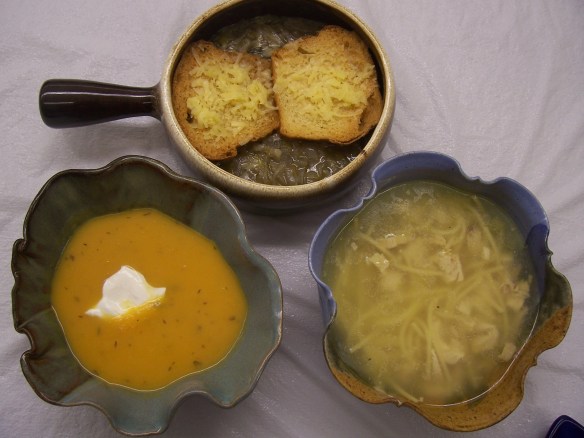
 I don’t know about where you live, but here in my corner
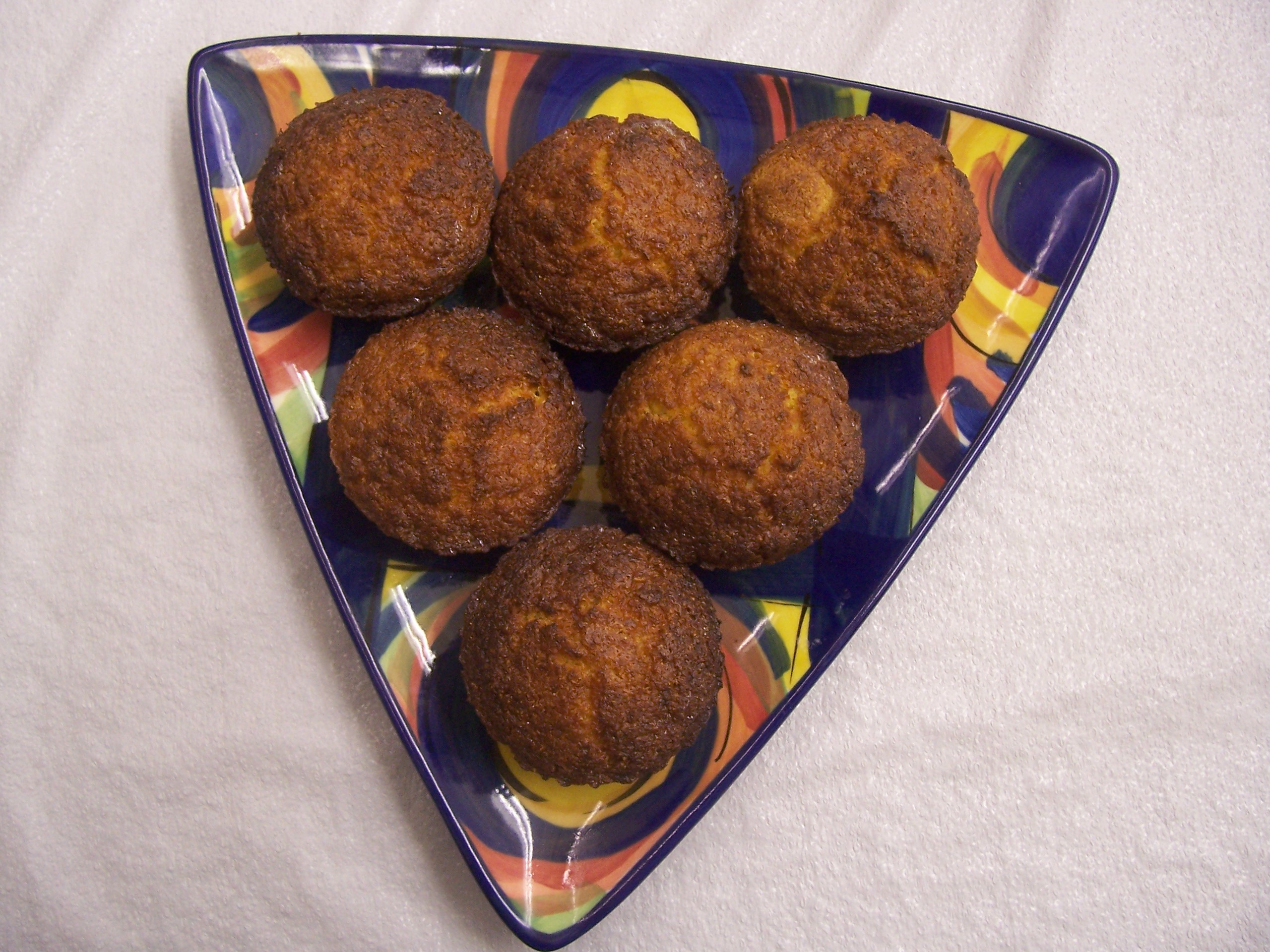
 of the South it’s a cold and wet winter’s day — with more to come. Perfect for soup! And luckily just this week I went to a soup- and stock-making class at the Shoals Culinary Complex business incubator in Florence, Alabama — http://shoalsec.com. My friend Sherry Campbell, the culinary-complex director, teaches the classes and always makes me want to go home and immediately start cooking. And with soups, you can. I mean, we all (usually) have plenty of water around, right? That’s pretty much all you need … well, maybe some vegetables, too. And some butter and olive oil. A little salt? But that’s all! Sherry used a Jamie Oliver recipe for English Onion Soup with Sage and Cheddar and it was some of the best onion soup I’ve ever had. Most of the times when you order onion soup in a restaurant, it’s too 1) sweet, 2) salty or 3) cheesy. But this was juuuusssttt right. The key is using three different kinds of onions — red and white onions plus shallots — along with garlic and leeks and then sauteing the veggies slow and low so they’re soft and rich. Then add the stock and simmer. And when you put the bowls under the broiler with the bread and cheese, add just a bit of cheese so it’s not overwhelming. Result? Perfection! Sherry also made a creamy Sweet Potato and Apple Bisque that didn’t have one drop of cream in it and a super easy Chicken Noodle soup that makes the broth and the soup at the same time. Sherry also reminded us to save all vegetable trimmings and peelings — I’m keeping mine in a plastic bag in the freezer — for vegetable stock. And to go with soup, you’ll need some good bread, such as these jalapeno corn muffins. They’re from Laura Hester of Red Gingham Gourmet. Laura’s a Shoals Culinary Complex client who started out baking bread in her own kitchen and now sells her products all over the area, including these muffins — which we lucky Shoals folks can buy frozen at local grocery stores. And if you’re not from around here, it’s worth a drive over just to get some, I promise you.
Chicken Noodle Soup
1 whole fryer chicken or 5 large bone-in chicken breasts
2 large carrots, peeled and cut into 3-inch sections
4 stalks celery, cut in 3-inch sections
1 large onion, quartered
4 cloves garlic
2 bay leaves, kosher salt and fresh ground black pepper
Put everything in a stock pot and cover with 8 quarts of water and cover. Bring to a boil and then cut heat back to medium and cook until chicken is falling off the bone, about 1 1/2 hours. Use tongs and pull chicken out of broth. Let cool. Pull skin off and discard. Pull meat from bones and chop the meat. Strain all veggies out of the broth. Add chicken to broth and season. Bring broth and chicken back to a boil and add one package of fettuccine or one package of spaghetti noodles broken into thirds. Cook until noodles are al dente.
Sweet Potato and Apple Bisque
Makes 6 servings
1 tablespoon canola oil
2 cups chopped onion
2 pounds sweet potatoes, peeled and cut into 1-inch cubes
2 tart apples, cored, peeled, cut into 1-inch cubes (about 12 ounces)
3 cups chicken or vegetable broth
3/4 cup apple juice
1 teaspoon each dried thyme and dried basil
1/4 teaspoon freshly ground black pepper
In a large saucepan heat the oil over medium-high heat. Add onion and cook for about 3 minutes, stirring occasionally, until tender. Add remaining ingredients, cover partially and bring to a boil. Reduce heat and simmer for about 15 minutes, or until the potatoes are tender. Cool slightly. In the bowl of a food processor or your blender or with an immersion blender, puree soup until smooth. Return the soup to the pan and heat until warmed through.
English Onion Soup with Sage and Cheddar
Serves 8
Good knob of butter (start with a couple tablespoons)
Olive oil
Handful fresh sage leaves, 8 leaves reserved for garnish
6 cloves garlic, peeled and crushed
5 red onions, peeled and sliced
3 large white onions, peeled and sliced
3 banana shallots, peeled and sliced
11 ounces leeks, trimmed, washed and sliced
Sea salt and freshly ground black pepper
8 cups good-quality hot beef, chicken or vegetable stock
8 slices good-quality stale bread, 3/4-inch thick
7 ounces freshly grated Cheddar
Worcestershire sauce
Put the butter, 2 glugs of olive oil, the sage and garlic into a heavy bottomed, nonstick pan. Stir everything round and add the onions, shallots and leeks. Season with salt and freshly ground black pepper. Place a lid on the pan, leaving it slightly ajar, and cook slowly for 50 minutes, without coloring the vegetables too much. Remove the lid for the last 20 minutes, the onions will become soft and golden. Stir occasionally so that nothing catches on the bottom. Having the patience to cook the onions slowly gives you an incredible sweetness and an awesome flavor, so don’t be tempted to speed this up. When your onions and leeks are lovely and silky, add the stock. Bring to the boil, turn the heat down and simmer for 10 to 15 minutes. You can skim any fat off the surface if you like, but I prefer to leave it because it adds good flavor. Preheat the oven or broiler to maximum. Toast your bread on both sides. Correct the seasoning of the soup. When it’s perfect, ladle it into individual heatproof serving bowls and place them on a baking sheet. Tear toasted bread over each bowl to it like a lid. Feel free to push and dunk the bread into the soup a bit. Sprinkle with some grated Cheddar and drizzle over a little Worcestershire sauce. Dress your reserved sage leaves with some olive oil and place 1 on top of each slice of bread. Put the baking sheet into the preheated oven or under the broiler to melt the cheese until bubbling and golden. Keep an eye on it and make sure it doesn’t burn! When the cheese is bubbling, very carefully lift out the baking sheet and carry it to the table. (From “Jamie at Home,” by Jamie Oliver. Copyright 2008. Published in the U.S. by Hyperion, jamieoliver.com.)

 I promise you: These miniature cupcakes — “petit fours” in northwest Alabama-ese — are as yummy as they look. Here in my town, if you’re having any kind of party you’ve got to have petit fours from the Victorian Tea Room. They are so soft and tender and melty you barely have to chew them up. If it’s a celebration, you’ll find Victorian Tea Room petit fours. Over the years, I’d say I’ve served hundreds of them here at our house. When Older Daughter got married, she had four — count ’em, four — Victorian Tea Room wedding cakes that tasted just like big petit fours. People still come up to me and say, “I’m dreaming about those wedding cakes.” Yes, indeedy. The kind folks who make these will decorate the tops any way you like — flowers, baby shoes, class years in school colors. And even though Older Daughter has grown up and moved an hour away and has her own house and her own family, she adheres to tradition and wanted Victorian Tea Room petit fours for Capt. Adorable’s second-birthday party. And, really, they’re perfect for toddlers. Plus, adults gobble them up like them, too. As her contribution to the Captain’s party, Younger Daughter wanted to decorate them herself. So we ordered four dozen plain and YD tapped into her inner cupcake-artist to create these beautiful little bites of adorable cuteness. The plan was for me to do some, too. However, you see the polka-dot ones in the upper left-hand corner? And the one with the big gloppy dot in the middle? That was the one I started … until YD gently took the tubes of colored gel away from me and suggested that I merely observe. She was right. Also: We should have ordered five dozen, because they went fast. Check out the Victorian Tea Room at http://victoriantearoomcatering.com













 Coffee with Cathy